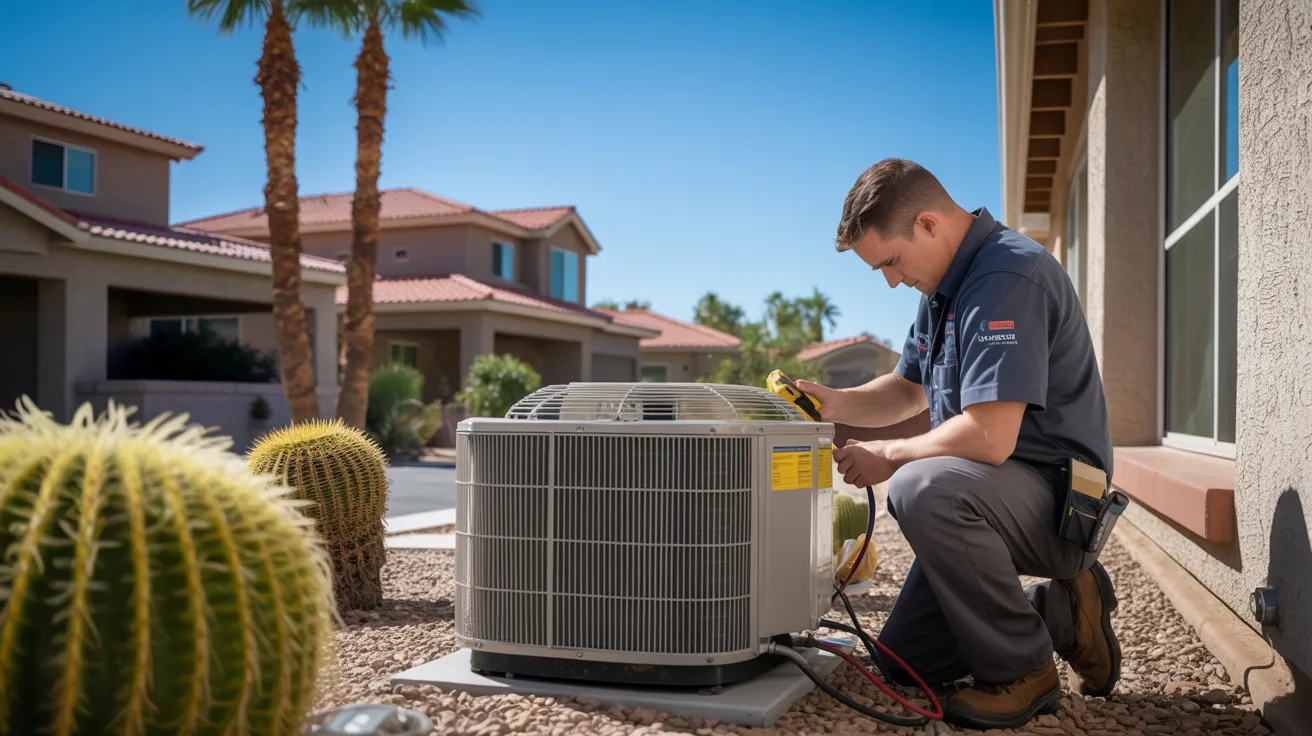
The heat in Gilbert, Arizona, isn't just a weather report; it’s a biological imperative. By late March, the suburban sprawl of the East Valley is already bracing for the Triple-Digit Countdown. For local HVAC companies, this is the "Golden Quarter"—the window of time where 80% of annual revenue is often secured.
However, a quiet crisis is brewing across the Maricopa County service sector. As we sit here in 2026, the technological landscape has shifted beneath the feet of traditional trades. Recent industry data and local market analysis suggest that Gilbert HVAC companies are currently missing up to 30% of their potential inbound calls.
This isn't just a missed connection; it’s a massive hemorrhage of revenue at a time when customer acquisition costs (CAC) are at an all-time high. In this deep dive, we’ll explore why the "old way" of answering phones is failing, how AI-driven communication is reshaping the desert heat market, and what the few "Smart Contractors" are doing to capture the leads their competitors are dropping.
The 2026 Reality: The "Instant Gratification" Threshold
Three years ago, a homeowner might leave a voicemail and wait four hours for a callback. In 2026, that patience has evaporated. We live in the era of the "Instant Response."
The modern Gilbert homeowner—likely a professional working remotely from a home in Power Ranch or Agritopia—uses their smartphone as a remote control for life. When their AC compressor dies at 2:00 PM on a Tuesday, they don't want a "we'll get back to you" message. They want a diagnostic appointment scheduled before they put the phone back in their pocket.
The Math of the Missed Call
Let’s look at the numbers. If an average HVAC repair ticket in Gilbert is $450, and a full system replacement is $12,000, the blended lead value is approximately $1,200 (factoring in conversion rates).
If a mid-sized shop receives 100 calls a week during the peak season and misses 30 of them due to busy lines, after-hours occurrences, or human error at the front desk, they are effectively throwing $36,000 per week into the gutter. Over a 12-week summer, that’s nearly $432,000 in lost revenue.
Why Humans Can No Longer Keep Up
The 30% gap isn't usually due to laziness; it’s due to the physical limitations of a traditional office setup.
1. The "Mid-Day Surge" Bottleneck
HVAC calls don't come in a steady stream. They come in spikes. When the outdoor temperature hits 105°F, every unit that was struggling finally gives up. Between 11:00 AM and 2:00 PM, a front desk coordinator might receive 15 calls simultaneously. Even the fastest dispatcher can only talk to one person at a time. The other 14? They get a busy signal or a voicemail. In 2026, a voicemail is effectively a redirect to your competitor's website.
2. The After-Hours Void
Gilbert is a commuter town. Many homeowners don't realize their AC is failing until they walk through the door at 6:00 PM. By then, most HVAC offices have switched to an "answering service." Traditional answering services are notoriously clunky. They take a name and number, but they can’t diagnose, they can’t see the live schedule, and they can’t offer the homeowner the reassurance of a locked-in time slot.
3. The Shift to "Silent" Communication
Interestingly, a large portion of the "missed calls" in 2026 aren't calls at all. They are missed opportunities via Google Business Messages, Instagram DMs, and website chats. Gen Z and Millennial homeowners—now the primary buyers in the Gilbert market—prefer to text rather than talk. If your business phone number isn't text-enabled with an automated responder, you are invisible to 30% of your demographic.
The AI Revolution: How Gilbert’s Top 1% Are Winning
The companies not losing that 30% are no longer relying solely on human receptionists. They have integrated AI Communications Hubs that act as the first line of defense. This isn't the "press 1 for sales" menus of the past; this is sophisticated, conversational AI.
Voice AI: The End of the Voicemail
In 2026, LLM-powered (Large Language Model) voice agents can answer the phone on the first ring, 24/7. These agents sound indistinguishable from a local resident. They can:
- Ask the homeowner about the specific symptoms of the AC unit.
- Check the real-time availability in ServiceTitan or Housecall Pro.
- Book the appointment directly into the calendar.
- Process a "Priority Fee" for emergency calls.
When the Gilbert homeowner calls at 11:00 PM, they stay on the line because the AI is actually solving their problem, not just taking a message.
Multi-Channel Synchronization
The leaders in the Gilbert market have unified their communications. Whether a lead comes in through a Facebook ad, a Google search "click-to-call," or an SMS, the AI handles the intake. This ensures that no lead falls through the cracks, regardless of the platform.
Case Study: The "Agritopia Turnaround"
Note: Names changed for privacy.
"Desert Chill HVAC," a family-owned operation in Gilbert, noticed their growth had plateaued despite spending $5,000 a month on local SEO and PPC. An audit revealed they were missing 28% of their calls, mostly during the lunch hour and after 5:30 PM.
They implemented a specialized AI Voice Agent. In the first 30 days:
- Response Rate: 100% (Up from 72%)
- After-Hours Bookings: Increased by 415%
- Customer Satisfaction: Google reviews mentioned the "easy booking process" more than the actual repair.
By capturing the 28% they were previously missing, the company added an additional $84,000 in booked revenue in a single month—without spending an extra dime on advertising.
The Cost of Inaction: The "Death Spiral" of Ad Spend
Most Gilbert HVAC owners react to a slow week by "turning up the dials" on Google LSA (Local Services Ads) or PPC. But if your intake system is broken, increasing your ad spend is like trying to fill a bucket with a massive hole in the bottom.
You pay $60 for the lead, the lead calls, you don't answer, and the lead calls the next person on the list. You just paid $60 to send a customer to your competitor. This is the "Ad Spend Death Spiral," and it’s why many long-standing Gilbert shops are being out-competed by smaller, tech-savvier outfits.
Steps for Gilbert HVAC Owners to Reclaim Their Revenue
If you want to stop the bleed and capture that missing 30%, follow this 2026 playbook:
1. The 10-Second Audit
Call your own office at 12:15 PM and 6:30 PM. If you don't talk to someone (or a highly capable AI) who can book an appointment within 10 seconds, you are losing money.
2. Implement Text-to-Schedule
Enable SMS on your landline. When a call is missed, have an automated system immediately text the caller: "Sorry we missed you! We're currently helping another neighbor in Gilbert. Would you like to see our available repair slots for this afternoon? [Link]"
3. Deploy an AI Intake Agent
Look for platforms that integrate directly with your FSM (Field Service Management) software. The goal is "Zero Latency." The moment the customer feels the pain of a hot house, you provide the relief of a scheduled solution.
4. Optimize for Local Context
Ensure your communication tools understand Gilbert-specific nuances. Whether it’s knowing the difference between a home in The Islands versus a commercial unit in the Heritage District, local context builds trust.
Conclusion: The Future of the Trades is Automated
As we move further into 2026, the line between a "Tech Company" and a "Service Company" is blurring. The HVAC contractors in Gilbert who embrace AI-driven automation aren't just making their lives easier; they are capturing a massive segment of the market that their competitors are simply ignoring.
The 30% gap isn't a problem—it’s an opportunity. For the owner who fixes their intake system, it's the equivalent of a massive, permanent raise. In the heat of Gilbert, the fastest responder doesn't just win the job; they win the customer for life.
Don't let your next $10,000 install go to voicemail. The technology to capture every single lead is here. The only question is: will you be the one who answers, or will your competitor?